Saturday, 13 January 2007

Peddling the Gospel


It's a peculiar thing, but the Churches of God are, despite their reduced circumstances, one of the more visible presences on the World Wide Web.

The proof of that assertion is in those irritating Google ads that tie in website content with whatever wares a retailer has to peddle. It doesn't have to be a specifically COG association either; chances are that if the keyword is Bible, prophecy, Sabbath or something similar, Google will deliver a smorgasbord of the usual suspects.

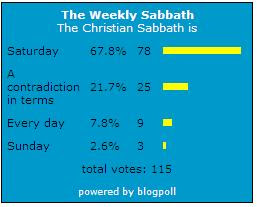
Example: the current AW poll results are surrounded by Google ads. I'm not knocking it, because it means the service is free (or alternatively, the COG advertisers shell out for it, which is a satisfying thought.) But even when the text of the poll has nothing particularly COGish about it, Papa Pack turns up to the party, usually just across from UCG. And, horror of horrors, Hulme seems to have finally “caught on” in a bid to attract traffic to his Vision website, and even Ron Weinland is promoting his brand of soon-coming doom.

So what? Well, I don't notice the Mormons using this strategy, or the Jehovah's Witnesses, or the SDAs. Maybe they're just not as desperate. On the other hand, maybe Pack and friends have hit on a really successful way of marketing the One True Gospel!

Yeah, right.

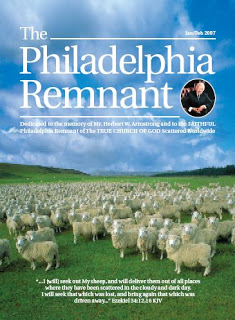
Meanwhile Don Billingsley has a new magazine for his faithful flock (who, as you can see, feature on the cover.) Something to put on the coffee table alongside The Good News, Vision, Tomorrow's World, The Real Truth, The Philadelphia Trumpet, The... oh, you get the idea. The new entrant is called The Philadelphia Remnant. Nifty title huh! Now to pick up a few subscribers maybe someone could suggest he spend some of the generous tithe money on those cool little Google ads...

Friday, 12 January 2007

A Snake in the Grass


Every so often a troublesome fellow comes along who turns the barrel of certitudes upside down, dumps them all over the carpet and then stands there smirking while everyone else is rendered speechless.

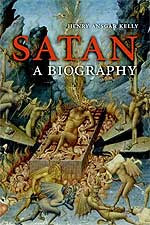
Such a troublesome spirit is Henry Ansgar Kelly, author of Satan: A Biography.

Kelly enters the fray from UCLA. Not a theologian, but a professor of English with a passion for Medieval history. As we all know, non-theologians are dangerous creatures with a nasty habit of thinking outside of the square.

Now let's pause for a quick true or false quiz:

1. Satan is also known as Lucifer (T / F)
2. Satan first appears in Genesis as the serpent who tricks Eve (T / F)
3. Satan fell – he was cast out of heaven for leading a rebellion against God long ago (T / F)
4. Revelation speaks of a coming Anti-Christ (T / F)

If you said true to any of the above, Kelly has news for you. In a closely argued book which isn't without a sense of humor, the author sets out to put the record straight, and the gasps from the cheap seats are quite audible.

Now, just to be clear, we're not talking about some Biblicist text-banger who has discovered a “new truth.” This is a serious historical account of how we came to believe what we do about Satan. And according to Kelly, most of the things we think we know about the devil are creations of the Church Fathers, especially Justin Martyr, Origen and Tertullian. And that includes a lot of detail that Herbert Armstrong taught. Kelly doesn't mention Armstrong, but anyone who has read the literature will see that, for example, much of that “new truth” in his booklet “Did God Create a Devil?” was lifted directly from impeccably Catholic sources. Kelly argues that these views were then read back into the Bible, or “retro-fitted.” Put another way, it doesn't really say what most of us assume it does... and he proceeds to make a strong case.

Kelly goes through every occasion where Satan or the devil (which he translates as a proper noun, Devil) appears in the Bible, and even takes the reader through a crash course on the influential books of Enoch, Jubilees and the Wisdom of Solomon. The Prince of Darkness emerges as an authorized agent of God, a kind of divine Tester, not a particularly nice one, but “just doing his job” as they say.

And who really is Lucifer if he isn't Satan? Well, maybe not who we think he is, and Kelly indulges in a fascinating bit of exegesis to demonstrate another possibility entirely.

This wide ranging book is a major broadside at traditional beliefs, and the surprise is just how traditional COG beliefs on this subject really are. It's sure to stir up a hornet's nest, or perhaps it would be more apt to say a devil of a fuss.

Wednesday, 10 January 2007

Meanwhile back in Holy Mother Church


A couple of items in the Nov/Dec issue of Together (the downsized WN) caught the sharp eyes of AW readers.

Ron Kelly, despite retirement, is the Big Enchilada (Group Tour Coordinator) for this year's Festival Cruises and Tours - the un-FOT aFlOaT. Pray for calm seas brethren, though for a truly Biblical experience wouldn't a reenactment of Acts 27:41 be fun!

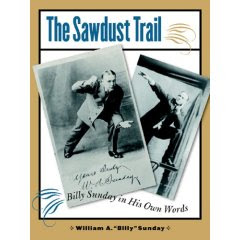
And AW's most famous correspondent from pre-blog days, DP, notes that WCG has lost its "last founding member," Mrs Bobby Fisher. "Mr. Armstrong baptized Bobby while she was in her early teens, and she often spent time with the Armstrongs in their Eugene home. She said it was her responsibility to help spreading sawdust on the floor at the front of each meeting room or tent so people responding to the altar call would have a place to kneel. She said that in the early years, Mr. Armstrong would never preach without giving people a chance to come forward and make a commitment."

Yup, ol' Brother Herb dragged 'em up the sawdust trail in the early days. Somebody tell Gerry.

Piddling on the fence posts

There are two types of COGgers, inclusives and exclusives, open and closed. Which people identify with says a lot about whether they're caught up in a sectarian spirit or not.

Take Ken Westby. Ken was one of those who took the high road in the mid-70s and walked away from what was then a very successful religious operation and a comfortable ministerial lifestyle. Is Ken "open" or "closed"? Here's a quick quote:

"The Azusa Street Revival launched an amazing modern movement and I'm sure there are many sincere Christians included in it, but to suggest it is a modern display of the events and gifts of the Pentecost following Christ's resurrection is folly and has no basis in Scripture."

Ken seems to be stating two things. (1) He believes that there are genuine Christian people within the Pentecostal fold, and (2) Pentecostalism nonetheless isn't the same thing as the early church experienced. Fair enough, he's being gracious in his disagreement and leaving open the possibility that the Good Spirit works among these people too.

Now compare what another COG commentator has to say about Ken's comments.

"There are no sincere real Christians involved with the Azusa Street Revival--there are many sincere people who do not truly know Christ. And actually, that is a problem with ACD--ACD's [sic] denies the pre-existence of Christ and the accuracy of the New Testament (please see the article Binitarian View: One God, Two Beings Before the Beginning), hence I do not believe that ACD really is a COG."

Here's a typical exclusionist in full cry. Those boundary markers are really important, and they have nothing to do with the beatitudes or loving service to others. Nope, those boundaries are dogma. When you think "faith" means "doctrine" it's really important to patrol the perimeter, bark at those beyond and chase out any who are out of step. That is what makes a sect work. He does both things here: yaps at the Azusa-style Charismatics - they're definitely beyond the pale - then nips at Ken's heels to demonstrate that he has no right to be counted as a member of the inner circle, a brother or an equal.

How anyone can stay quite this staunch and rigid I'm not sure. The society in Jesus' day was, as far as we can tell, a very exclusionary one with lots of religious boundary markers. The Jesus portrayed in the Gospels doesn't seem to have given a hoot about them.

Most of us were drawn into the WCG (or a splinter) at a time when we saw the world in black and white terms. Good and evil, God and Satan, blessing and cursing, Sabbath or Sunday. Most of us are still not so good at recognising shades of grey. But life is a subtle thing, and the "heretical" Samaritan is the one who stops to help the stranger, the "heretical" Quakers are at the heart of the anti-slavery movement, and the "wicked liberals" have done more to establish a just society than all the Bible-waving evangelists added together. Which kind of makes you wonder whether the COGs, which have contributed so little to the betterment of our world, do anything but look utterly foolish when they utter their jeremiads on society's alleged ills. Faith is a lot more than assenting to some doctrine or other, and doctrinal correctness is a lot less than faith.

He drew a circle that shut me out -
Heretic, rebel, a thing to flout
But love and I had the will to win
We drew a circle and drew him in.

Which seems a nobler thing to do than putting one's energies into patrolling the boundaries and piddling on the fence posts.

Tuesday, 9 January 2007

Study Bibles


As part of my drive to become the oldest person in history to acquire a recognised qualification in theology (maybe I exaggerate slightly) it's been necessary to acquire a decent Study Bible, one that supports the text with the kind of notes and information that provides context and throws light on some of the more obscure references. While I already had a variety of translations, nothing quite met those criteria.

I looked first at the Zondervan NIV Study Bible which is supposed to be the most popular. The notes on the dust-cover say it all, evangelical and conservative. If that's your poison, you could do a lot worse, but I got the feeling the contributors were looking through rose colored spectacles. Where does the scholarship end and the apologetics begin? I gave it a miss, along with the TNIV (gender-neutral text but same notes.)

In dithered for a while over the The New Oxford Annotated Bible. Although it uses the NRSV and has gone through three editions so far, it's showing its age a bit, and the notes are a little thin on the ground. It still has a great reputation, but I'm prepared to wait for a 4th edition that (hopefully) brings it up to speed with what the others offer.

In the end, in a classic case of overkill, I ended up going for three very different options.

The Jewish Study Bible. (Oxford, 2004)
That might seem an unusual choice, but it's definitely a fresh perspective, and why settle for something that will do no more than just tell you what you expected it to? The translation is JPS's Tanakh which is outstanding, and the supporting essays, maps and notes are excellent (just don't expect a New Testament.)

The Catholic Study Bible (2nd edition) (Oxford, 2006)
The translation used is the New American Bible, which is very readable, and it boasts some great contributors, including John J. Collins, Luke Timothy Johnson and Pheme Perkins. The Reading Guides provide a brilliant introduction to the individual books of the Bible.

The HarperCollins Study Bible. (HarperCollins, 2006)
This is the major competition to the New Oxford Annotated. Included are all the books in the Protestant, Catholic and Orthodox canons. Like the Oxford it also uses the NRSV (which happily is the required translation at the University of Otago), but from what I've seen it offers better value. The contributors come from a wide range of backgrounds, and the Society of Biblical Literature has lent its name to the project. It'll probably get the most use of the three, and is already my "default" choice.

That barely scratches the surface when it comes to what's available, but a lot of the Study Bibles on the shelves of Christian bookshops are, to put it gently, so heavenly-minded that they're of no earthly use. A good Study Bible serves to drive a few pitons into the rock face to help the reader make basic connections without having to drag out commentaries and handbooks every time, and doesn't hide the difficult texts behind a veil of comforting platitudes. And yes, you can pick up a KJV edition if you really want to (the one I thumbed through was endorsed by Jerry Falwell, so I put it back pretty quick!)

(This is the first post in an occasional series on "building a library.")

Monday, 8 January 2007

Enduring

There's a new kid on the COG block, all set to do business and receive your tithes. C'mon down Chuck Bryce and strut that COGwalk!

The new entity has been named the Enduring Church of God. No website yet, but we're assured there's one in the works. And you'll be as delirious as I am to learn that one of their first publishing projects will be a hymnal just like the old purple one!

Actually, Enduring is a great name. If there's one thing the brethren have to master in any COG it's enduring. Enduring slop for sermons, begging letters, bad music and some of the worst "counsel" imaginable from underqualified ministers. Yep, enduring sums it up.

But as to whether the ECG (not to be confused with other ECGs like the hilariously named Eternal Church of God) will endure very long as an institution, that's something else again.

Saturday, 6 January 2007

BI Challenged


A former member of the Ambassador Big Sandy staff - and a person not entirely unknown for his comments here - has provided an interesting short article on some of the problems with British-Israel beliefs. A brief clip:

"The burden of proof is on the adherents of British-Israelism to demonstrate that there is ethnic separation between the people of the British Commonwealth and the people of the United States. The entire belief in British Israelism rests with its full weight on this simple and singular pillar."

The essay, appearing under the pen name Neotherm, appears over at Greg Doudna's site -- and it seems that there's more to follow! Stay tuned.

Then there's this...

"The legend of the ten lost tribes of ancient Israelites has caught the imagination of writers and poets during the centuries, finding them was the quest of many. It came partly true when..."

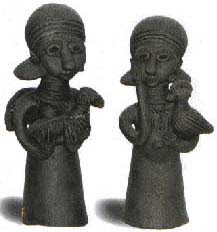
You also might want to check that article (which relates to the artwork above) and discover a credible lost tribe story that for some inexplicable reason the BI brigade don't usually bother to mention...

Bring back Tomorrow's World!


Let's all help out the LCG as it faces a new crisis, this time a marketing crisis. Whether the lads have had advance warning I don't know, but I for one am willing to contribute my services in search of a solution.

LCG needs a new name for its magazine and TV show. Quick!

Those of us in Her Majesty's Dominions - if we're sufficiently long in the tooth - will remember the BBC science series Tomorrow's World. No hillbilly apocalyptic apologetics there, it was cutting edge stuff.

TW went the way of all TV shows after nearly 40 years. FORTY YEARS. That gives the Beeb a substantial claim to the name! It first saw the light in 1965, long before WCG launched the short-lived Good News of Tomorrow's World in - was it 1979?

Of course, there was no problem as long as Auntie wasn't using the name. Alas, the Grand Old Dame has had a change of heart. Check out this story. The name is being dusted off as part of a rebranding exercise, even though there are no plans to resurrect the show (though we live in hopes!)

"BBC News has decided to bring back the "brand" for a whole range of technology coverage which you will see on TV and online over the coming 12 months."

Can you see the possibility for confusion? The BBC getting letters asking about the 2300 days of Daniel and Rod getting enquiries about solar-powered washing machines. Ghastly!

So let's all put our noggins together and come up with a new name for the boys in Charlotte to use. Suggestions please.

Thursday, 4 January 2007

Where's Wally?


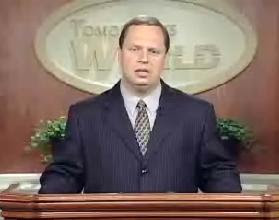
In case you missed it, the LCG has blooded a new face and voice on its Tomorrow's World telecast, a younger frontman to complement the aging duo of Meredith and Ames, both now of pensionable vintage.

The new man of the moment is Wally Smith, a Missouri pastor now elevated to the tele-Troika. Mind you, he's still a junior member of the team, officially billed on his first outing (America on the Brink) as "guest presenter." Presumably that leaves room for Rod to dump the "rookie" (as he calls himself on his blog) if he doesn't scrub up to the Presiding Evangelist's satisfaction. Was it a good sign that WGN pulled his first program due to "strong comments"?

So, is Wally the shining new hope? You can view his appearance before the cameras on the LCG website and judge for yourself. My own view: nice suit, interesting hand movements, too bad about the script.

Creation and Revelation

Polls always intrigue me. They provide a quick feel for how a group of people - in this case the readers of AW (and by extension at least part of the COG and ex-COG community) - think about issues. The last two focussed on the first and last books of the Bible. With a minimum number of 100 participants, a large sample by most blog standards, it's likely the results are fairly representative.

It surprised me - though it probably shouldn't have - that gap-theory creationism came out ahead of the other options. It surprised me again when so many people elected to drop the eschatology that defines our Adventist past and agree that the prophecies of Revelation are largely metaphor. Those two results don't seem to sit easily together, but there you have it.

One thought keeps running through my head in light of the second poll. The major splinter groups continue to emphasise "prophecy" and the End Times, and yet many within seem to be thoroughly "burned over" on this kind of thing. Maybe it's time for groups like UCG to quit beating the drum and work toward a more balanced position - where they might find a sizable number of the brethren patiently waiting for them to catch up.

Beginnings poll

End Times poll

Update: Sabbath poll results