Monday, 5 February 2007

Pastor Debby


The Worldwide Church of God finally has its first woman elder.

Debby [Bailey] was commissioned in 2002 as part of the pastoral team in the Pikeville congregation. She is active in the community, serving on the National Day of Prayer Committee in Pike County since 1997, where she has served as chairman for the last five years. She also has been involved in a jail ministry to female inmates for almost three years. Debby has been elected as the 2007 vice president of the Pike County/Pikeville Area Ministerial Association, in which she has been active for a number of years. She is also chairman of the July Jam committee, which is an outreach to the youth in the community through Christian rock music. Debby and her husband, Eddie, married since 1979, have an 11-year-old son, Max.
(From Joe's Weekly Update for Jan. 31)

While it certainly won't be a panacea for WCG's woes, it's probably a good move (all the better because Debby wasn't one of the names tossed around by the more cynical among us as the most likely to be ordained first.) Of course it will upset the more patriarchal in our midst, but what else is new. Fulmination alert! Batten down the hatches and secure the teapot, tempest ahead!

Congratulations Debby. Let's hope your groundbreaking ordination will lead to some cracking in the hierarchical mindset.

Sunday, 4 February 2007

Random Epiphanies


Norman Shoaf is a former WCG minister and spokesman. These days, while the WCG still runs some of his material on its website, Norm has made a reputation for himself as a journalist and editor, and a very good one at that judging from the various awards he's received, over at Antelope Valley Press.

Last year Norm published a book on religion called Random Epiphanies. According to the PR:

Shoaf has written hundreds of articles on religion, ethics and moral behavior under his own byline, and ghosted articles for multiple high-ranking church officials.

Oh, please, details!

As Opinion and Religion Editor and, later, City Editor at the Antelope Valley Press in northern Los Angeles County, California, Shoaf earned awards for editorial writing from the California Newspaper Publishers Association and for music reviewing from the Suburban Newspaper Association. His weekly "Portfolio" column won him recognition in 2003 as a Blue Ribbon Finalist for Columns, Commentary and Criticism from the CNPA Better Newspaper Contest. In 2005 he received the Walter Everett Fellowship from the American Press Institute.

This collection of columns includes such titles as "10 Things I Hate About Religion," "10 Things I Love About Religion," and "Whatever Happened to Ancient Christianity?"

It's doubtful that Norm will have any specifically WCG content, but if anyone has read Epiphanies and would like to offer an opinion (or even a review) for AW, drop me an email.

Saturday, 3 February 2007

Tales of the Good Old Days - Part 3


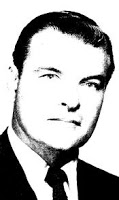
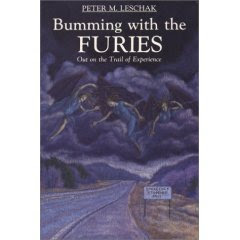
It's interesting to compare Peter Leschak's impressions with Greg Doudna's Showdown at Big Sandy. In many ways they seem to have seen things alike. In fact Greg refers to and quotes Leschak in a couple of places. When it comes to the role of Howard Clark (pictured in 1964) they also agree. In Bumming With the Furies Peter Leschak writes:

But early in 1972, a minister named Howard Clark was transferred to Texas from the headquarters campus in Pasadena, California. He was something of a legend in the WCG. While serving with the Marine Corps in Korea, he was severely wounded and subsequently paralyzed. He received one hundred percent disability from the Veteran’s Administration and was confined to a wheelchair. But then “God called him into the Work,” as we liked to say, and after being anointed with oil and prayed over by a WCG minister, he was healed – he was able to walk. He attended AC and rose through the ranks, demonstrating a remarkable talent for preaching and public speaking.

He was loud and irreverent, articulate and keenly intelligent. One had to wonder why he was allowed to stay; he did little obeisance to sacred cows.

The presence of such a renegade was a revelation, but Clark offered us more than his own puzzling existence. That summer when life on campus slowed and many students and faculty were gone, he initiated what he called “waffle shops.” These were informal evening gatherings advertised by word of mouth. There might be poetry readings (of all things!), a film, Bible study, and of course listening to Clark as he “waffled” – extemporaneously expounding on just about everything. To cadets in the army of God, regimented in body and spirit, this could be shocking.

During one waffle shop, Clark quipped: “If Jesus Christ was a student at AC today, we’d kick him out.” We had strayed too far from the original precepts to be tolerated by the original teacher. It was that heretical thought, and a thinly veiled reference to some WCG ministers as “con artists” that spurred the “gestapo” into action. A senior who had attended the gathering, a leading upper-classman, went to the Dean of Students (Ron) Kelly the next day and reported what distressing things he had heard. The waffle shops were officially banned.

Unlike most of the faculty, Clark lived off campus, away from the bosom of the institution. Students began filtering out there, alone or in small groups, to sit in his office and listen. Rumors of a “heretical underground,” a “free thought movement,” began to circulate. People felt threatened. But Clark was not attempting to undermine AC. His main point was that we were all individuals before God and that we must truly cultivate independent minds. But that was not necessarily good for the cohesiveness of the army.

In the meantime, we were buying books-under the counter. Clark recommended The Faith of a Heretic by Walter Kaufman, and one of the students who worked at the college commissary ordered a few copies and kept them discreetly out of sight, far from the Louis L’Amour westerns. If someone specially requested a copy, he would slip it into a bag and quietly had it over. The eyes of the true believers were everywhere; this was not an acceptable book for God’s students.

On page twenty-two, Kaufman had written: “The aim of a liberal arts education is not to turn out ideal dinner guests who can talk with assurance about practically everything, but people who will not be taken in by men who speak about all things with an air of finality. The goal is not to train future authorities, but men who are not cowed by those who claim to be authorities".

These were not words that Chapman would have us memorize, especially since one of the conceits of AC was that it was providing us with a liberal arts education. My friend Gerry, who was on the staff of the college newspaper, once neglected to perform some small task that the faculty advisor expected him to have done.

“I thought (so and so) was going to do it,” Gerry told the man. “That’s your problem,” replied the journalism instructor/ordained minister, “you don’t think!” He then told Gerry that he wanted him to be a robot, and, to demonstrate; he walked stiffly and jerkily around the room. It was a sincere performance, devoid of irony.


Yes, Virginia, there were good ministers. But not nearly enough.

Wednesday, 31 January 2007

Tales of the Good Old Days - Part 2


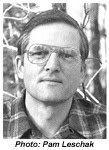
Another excerpt from Bumming With the Furies: Out on the Trail of Experience by Peter Leschak (pictured), as posted on the WCG Alumni board.

Bill stood up to ask a question in Theological Research, the third-year Bible class. He was genuinely puzzled, and politely (I thought) disputed the conclusion we were supposed to have reached as the result of completing a homework assignment concerning the canonization of the Bible. The instructor, a minister named (Benjamin) Chapman, immediately bristled. I could actually see him stiffen, tensing up as if for a physical battle. If he had been a dog, his hackles would’ve risen. An argument ensued, with Chapman not addressing Bill’s question, but rather accusing him of arrogance and insubordination. Bill stated repeatedly that he wasn’t challenging Chapman’s authority (though the question by its very nature of course had) nor showing disrespect, but the irate professor ridiculed him, demanding to know if he even believed in the Bible. A few students told me later that they had grown increasingly bewildered, amazed at what they considered to be a serious overreaction by Chapman. They said that if Bill had walked out, they’d have followed. (There’d been many complaints about the class among students.)

But finally Bill decided to just shut up and sit down. He was shocked, genuinely perplexed by what vehemence and contempt of Chapman’s reaction to what Bill considered a legitimate question. This public attack by a superior, an ordained minister of God, was so distressing that Bill felt the whole thing must’ve been his fault. That evening he went to Chapman’s home and apologized. This humbling, magnanimous effort received a cold, “Well, you should apologize” response. There was no sense of warmth or conciliation, and absolutely no admission of at least partial wrong. Bill left angry and humiliated, violated once again. He believed that at “God’s college” there should be some recourse, so he made an official appointment with Chapman through his secretary, and asked if I could tag along. We discussed the “mission” at length and decided our purpose would be to respectfully inform Chapman that the majority of his students were dissatisfied with the way his course was run, and to propose some changes we felt would be beneficial. We believed the attitude of the class, especially after Bill’s excoriation, was ugly and that Chapman should be aware of it.

Unfortunately we were not granted an audience for three long weeks.

On a Friday evening in December, we finally entered Chapman’s office, nervous and intimidated…. We spent two hours discussing these matters, and all was serene and friendly, at least on the surface. We shook hands as we left, and Bill and I were satisfied that all had gone well. We congratulated each other, convinced we had accomplished some good. Silly boys.

Next morning at Sabbath services, Chapman delivered the sermon. The standard length of a sermon in the WCG was one to two hours (though I sat through some as long as three, and heard about a few legendary five-hour marathons). Chapman all but personally attacked Bill and me for nearly an hour and half. I was stunned. Bill had opted for the afternoon services and thus missed another public thrashing. In a vicious assault upon those who question and doubt, Chapman referred to several points we had discussed only several hours before in the apparently benign atmosphere of his office. I expected to hear our names spewed out at any moment, held up as pariahs or perhaps insidious dupes of Satan. He set up straw men and violently knocked them down, quoting excessively from an outside theological work, which was obviously sloppy and in error as far as his audience was concerned. He used the book as an intelligent scapegoat, a means to ridicule contemporary scholarship in general (and hence thinking in general). He lambasted and belittled those who critically examined what he billed as the Truth. He laid it right out, asserting clearly, without equivocation: “IT’S NOT YOUR PLACE TO QUESTION WHAT YOUR TEACHERS TELL YOU!” So there it was - the true face of AC and the WCG. The hierarchy was not after truth, but power. They had all truth; there was no need to seek more and there was especially no need to take any gruff from mere students - lowly sheep of the flock.

Tuesday, 30 January 2007

Tales of the Good Old Days - Part 1


Across on the WCG Alumni Forum one of the regulars has been posting excerpts from a book by former AC student Peter Leschak, author of Bumming With the Furies: Out on the Trail of Experience. Several interesting anecdotes are told, including this one about the "rebellion" of 74.

On February 25 was the “Monday Massacre.” Garner Ted Armstrong had flown in from headquarters in Pasadena to end confusion and marshal the forces of righteousness. On the twenty-third he had delivered a blistering sermon at Sabbath services, inflaming the faithful with fresh distrust and, in some cases, hatred for the dissidents. It was an inspired performance by a talented orator. At the end, several hundred people spontaneously leaped to their feet, cheering and waving. I had a vision of Nuremberg, 1935, and was actually frightened. I counted six of us who didn’t cheer.

On the twenty-fifth, Garner Ted convened a minister’s conference at AC, and, after a forty-minute opening prayer, which saw him break into sobs, he harangued and intimidated the forty or so assembled church leaders for seven hours. Several entered the meeting with misgivings about the organization, but by the times it was over, only four still stood their ground, resisting the demand for total loyalty. They were fired from the ministry and disfellowshipped.

The next day it was the student body’s turn to be purified. Kelly and an associate delivered wild-eyed diatribes calling on us to “purge out those who are not willing to change!” Everyone knew who he meant; but of course it was the dissidents who had actually changed. We were told there was a “morass of rebellion” and that the situation was “insane.” The Devil was attempting to divide and conquer God’s church, and the rebels were on his side, partaking of evil. To cap it off, we were reminded, “there are things we shouldn’t even think; let alone say.”

Next day the student body was assembled, and Kelly announced that twenty students had been fired from their campus jobs because they had contact with disfellowshipped persons. The kicker was that he wouldn’t release the names of those who were “terminated.” You had to guess if you were among the causalities, and, therefore, further incriminate yourself by asking for official confirmation.

The next day Kelly kicked my friend Pam out of AC. She had been on the termination list and had gone to Kelly’s office to discuss her firing. She wondered why her job had been affected by a visit to a former member. Kelly replied that the salaries were paid via the donations of church members, so it was a betrayal of the brethren to use their money to pay dissidents. It would have been an appropriate moment to mention how the brethren’s money had been used top buy planes, limos, jewelry, and other extravagances for the WCG hierarchy, but Pam merely said, “I don’t think going to see a former minister should have anything to do with my job.”
“Your job isn’t to think, “ Kelly replied irritably. “You aren’t paid to think.”
“Oh, that’s right,” Pam countered, “Christians aren’t supposed to think.”

Kelly began to shout. He yelled, “That’s enough!” He didn’t want to hear any more. He told Pam she was expelled from AC, and, right on the spot, he instructed his secretary to file the necessary papers. As Pam left his office, he slammed the door behind her.

The “heretical underground” had grown cynical as the conflict in the WCG unfolded and we howled with mischievous delight when we discovered that Kelly had a bidet installed in the bathroom of his house. Some began to refer to him as “Clean ass Kelly,” and mused that since so many true believers were “brownnosers,” Kelly’s posterior must be scrupulously maintained in a pristine condition.

Saturday, 27 January 2007

Journal coverage


The November-December issue of The Journal is rolling off the presses and into the mailbags. It includes a detailed report on UCG's hassles – self inflicted – in El Salvador. Quotable quote: “[Reg] Killingley says what he sees as the mishandling of the situation is not entirely Mr. [Leon] Walker’s fault because he is, “in so many ways, archetypically Anglo-Saxon and antithetically Latin.”

Another quotable comment, this time from Brian Knowles in the letters section: ““Evangelist” is not a rank but a role. It is a function, not a position in a pecking order.” We'll be sending Bob Thiel around to sort Brian out on that one!

Can't get to sleep worrying about the “70 Weeks Prophecy”? Anyone with a penchant for that kind of thing can indulge themselves in an essay by Gary Arvidson and Clyde Brown which serves as an extended ad for a couple of booklets they'll send you for a $5 donation. No thanks.

Willie Dankenbring gets front page treatment from Mac Overton, all positive. Jesus is the archangel Michael, the US is Ephraim (not Manasseh) in prophecy. No mention by Mac of all those embarrassing date-setting episodes (that have since been flushed) in the Flash.

For the visual learners among us, check out the photo that shows Jamaican CGI celebrity-leader Ian Boyne in an arm-upraised, finger-stabbing pose (almost Herbertesque) as he thrashes the pulpit during the FOT.

Perhaps surprisingly, there's no mention of the Bryce affair. I guess we'll have to wait for the Jan-Feb issue.

To get a peek at the issue, click across to www.thejournal.org/issues/issue116/jf113006.pdf. Compulsory reading for those who want to keep a non-stabbing finger on the pulse of life in the COGs.

Friday, 26 January 2007

All the way back


Charles Bryce is forging ahead with his niche COGlet, the Enduring Church of God. A recent letter to the holding-fast, old-timers is available on the AW Extra Google board. The new website, www.enduring.org, is not yet online, but expected to launch very soon.

"I want to re-emphasize what our focus must be. We are relentless in our determination to get back to the faith once delivered - all the way back. This must include getting back on the track laid down by Mr. and Mrs. Herbert W. Armstrong as they were guided to do by Jesus Christ - all the way back.

"All of us need to restudy the whole body of work done by Mr. Armstrong - over many decades... We cannot let our focus be blurred by those who are twisting and spinning Mr. Armstrong's teachings and even the scriptures themselves."


Same old song.

Across on Greg Doudna's site there's a new contribution from "Neotherm" on the treatment of 1-Ws (conscientious objectors during the Vietnam War) at AC Big Sandy. Greg notes that it is "an eye-opening, in some ways unsettling, article showing a sort of invisible parallel universe to the privileged student experience."

UCG's Darris McNeely has taken potshots at a new book which explodes an awful lot of nonsense surrounding the Book of Revelation and its use by prophecy nuts. Avoiding the substantive issues that Jonathan Kirsch raises in A History of the End of the World, McNeely, understandably in defensive mode, quickly dives off into reassuring platitudes. Don't be fooled, in reality this book is a powerful - and readable - counterstrike against the apocalyptic teachings of groups like UCG, and is sure to make any honest reader rethink the significance of Revelation. I thought I already had a reasonably good grip on the issues, but learned a lot anyway. The Kirsch book is mercifully jargon-free and written for the general reader - but is also informed by excellent scholarship. Like McNeely I've recently read "End of the World" ... but unlike him can highly recommend it!
Tuesday, 23 January 2007

Calling Dr Freud


Violence against women is a serious issue, and it's good to see Presiding Evangelist Meredith addressing it, however hamfistedly, in a TW editorial. But what does one make of this little tirade?

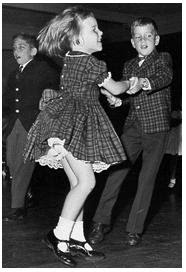
"Even back in the 1940s, my mother and her friends - no doubt like millions of mothers all across the United States - had pushed me and dozens of my classmates to attend "dancing school" - where we were taught to dance face to face and chest to chest with young girls barely entering puberty. We were just little children who wanted to play baseball and "kick the can." God does not forbid dancing, of course, but He does command us to "flee sexual immorality" (1 Corinthians 6:18). Why did our mothers push us into the kind of semi-romantic, semi-sexual behavior involved in that kind of dancing when we were only twelve years old?"

Uh...

"We were so embarrassed at holding these girls in our arms that we simply took off running - not knowing what else to do with ourselves. It would be several years before we were truly ready for such "romantic" involvements even in an innocent way. Why were our mothers pressuring us into this kind of precocious behavior?"
Uh...

Rod's childhood was traumatised by dancing lessons at age twelve? Rod - now a septuagenarian - still has unresolved issues with his mother?

As they say, "who'd have thunk it?"

Stuff to check out


I miss Brian Knowles' column in The Journal. I was reminded of that when the latest issue arrived on January 22nd, dated October 31. I know Dixon has a reason for the lag, but it's a bit irritating when the mailing label area reads "Time-sensitive material"!

Which in turn reminds me that I need to mail in a cheque for the renewal. A year without The Journal would be difficult for someone who writes about the COGs. The Journal has advantages this blog doesn't. Dixon is close to the beating heart of COGism in East Texas, manages to stay onside with almost everybody, and has the ability to treat topics in-depth. Some of the stories they've run have been outstanding (which is just as well considering some of the brain-dead advertising features.)

It's too bad Brian Knowles' latest article won't get the added exposure The Journal could provide. There it sits over at Ken Westby's site, and is well worth a click through. Brian's conservatism runs counter to my views on a whole range of issues, but he is still one of the most perceptive voices in the COG community. What he has to say about the priorities of the old WCG ministry and the anti-Semitic spirit in the church in those days is well worth repeating (but I won't, read the whole thing in context.)

It's also good to see XCG back in 2007. There's an interesting BI-related thread here, a discussion initiated by Doug Ward (now there's a guy who'd make a great Journal columnist), and Gary Scott is back from holiday with a new post on the Packatollah's need for numbers.

In the "whatever happened to" department, there's a chance to catch up with the fortunes of ex-minister George Geis over at Felix Taylor's blog.

Happy clicking.

Friday, 19 January 2007

Comfort Zones: Meant to be Broken


I've taken the title above from an article in the current GN addressed to young adults. The writer, Debbie Whitlark, reflects on a month-long solo backpacking trip through Europe, and her musings are worth repeating.

"In both physical and spiritual matters, people often meet every challenge - and thus every opportunity - with a well practiced list of excuses for why they will avoid the issue or why they will only expect a mediocre performance from themselves. But fears are conquered only through action, and they are only intensified by avoidance."

"We should remember that every challenge in life is a priceless opportunity to grow. We should not ask God to take away the problem while reciting a long list of explanations as to why we won't be able to overcome the challenge at hand. Instead we can confidently trust that God will see us through the trial, not always lift it from us."

"But growth cannot occur within familiar, comfortable territory. We must choose to keep discovering and expanding what we are capable of, rather than always staying within a comfort zone that would insulate us not only from nominal failure, but also from real success."


Debbie is talking in the context of physical challenges and embracing opportunities. I'd like to suggest that there's also a real application here to the way we think, the questions we ask, and the security blanket we cling to in the area of belief. The Churches of God constitute a "comfort zone" for many of us, and no wonder considering the trauma of the past several years. Moreso as we've seen institutions we trusted go belly-up, and leaders we admired betray their ideals, the tendency has been to cluster together for protection and reassurance in even smaller communities. We talk among ourselves and reinforce each other by steering away from the trauma that has pulled families apart and destroyed symbols that we valued. Some of us are literally living out our faith in fear.

"For God did not give us a spirit of cowardice..." (2 Tim. 1:9 NRSV)

Years ago I was invited to hear Desmond Ford speak while has was visiting Auckland. Ford, an Australian theologian who had risen to prominence in Seventh-day Adventism, had recently parted ways with his church. I was one of the very few non SDAs in the hall that day, and to be honest I remember very little of what was said except for one piece of counsel from the good doctor which made a vivid impression.

"You don't have to read my books," Ford explained, "but you do have to read! People who read grow, those who don't won't. Don't settle down and get too comfortable. Don't be afraid to ask questions. And never be afraid to keep reading and thinking."
Of course, I'm paraphrasing, but it's how I remember it, and I walked back to my car that day with a feeling of liberation. So many of us are downright fearful about finding out about things that might upset our applecart of beliefs. We avoid certain books because they might not say what we want them to, we avoid taking a class because our pet theories might be threatened, we attack the beliefs of others because we can't stand the thought that they might actually have some legitimacy and value.

As Debbie says, comfort zones are meant to be broken. But you don't need to go backpacking in the Swiss Alps to make the breakthrough. It's the unique glory of our humanity to ask tough questions and face down the fear, to learn and to grow. If our faith means something more than Linus' security blanket, why shouldn't we wade out into deeper waters, push the boundaries and embrace some of those questions that fear shuns?