
It's been pointed out that a minor Australian Sabbatarian ministry teaches that originally Islam was in some sense an embodiment of the Church of God. The leader of this group even goes as far as saying that Mohammad enjoined Sabbath observance, and that the Qur'an is a "commentary" on the Bible.
Clearly this is not what was implied in the recent AW post. In fact, in my opinion, it's complete rubbish. The Jewish Christians of Arabia certainly seem to have influenced Islam, but they were very different from what passes for the Church of God today, whether based in Cincinnati, Charlotte, Edmond or Canberra. In fact, if you do any reading on these Jewish Christian believers, you can't help but be struck by how different and strange they seem, rather than by the similarities.
The history of early Christianity is fascinating, but there is an awful lot we don't know. For example one scholar, Ray Pritz, contends that the group called Nazarenes were distinct from the Ebionites, and develops an apologetic reconstruction that must sit nicely with conservative, mainstream Christians. I don't buy that for a single moment (see Bob Price's review of the Pritz book.) The point is that history is often frustratingly fuzzy on the specifics. Sect leaders who turn speculation into dogma are not in the same business as cautious historians and scholars: let the buyer beware. How Jewish and Christian belief (along with Jewish-Christian belief) impacted on Islam may be an overlooked but interesting story, but how does that authorise, legitimate or lend credibility to any modern, unrelated Sabbatarian sect?
It doesn't. It does provide a lesson in humility, however, for those who want to use history as an ideological weapon in the service of doctrine.
All religions borrow from those that went before. Second Temple Judaism borrowed from Zoroastrianism (Satan, resurrections), early Christianity was as syncretistic as any other movement, Islam learned its monotheism in part from sectarian Christians and Jews, Herbert Armstrong raided the bottom drawers of Adventism, British-Israelism and the Mormons. And so it goes.

Saturday, 18 July 2009


Friday, 17 July 2009
Wednesday, 15 July 2009
A True History of the Not-So-True Church (Pt.3)
So where would you go to find a bunch of folk who were spiritual successors to the kind of early Christianity that continued to keep the Sabbath, Holy Days and other characteristics that traditional Church of God people believe identify the true church?
In part 1 I suggested that Church of God believers are totally unrelated to that movement, which died out in the West centuries ago. Have a look at the Bible that Meredith, Flurry, Pack, Kilough and others pound and quote: it's the 66 book Protestant version. The early Christians couldn't have used that, because it didn't exist back then. Their Old Testament was primarily the Septuagint, and they freely cited books that were never accepted into the later Hebrew and Protestant canons. The Churches of God are merely a cluster of confused Protestant sects with delusions of antiquity.
What about the New Testament? Well, there was no New Testament as we know it till 367 CE. In the years before then Jewish Christians had a particular affinity for a version of Matthew's gospel, but were wary of Paul's writings. There's a good case to be made that their beliefs underlie the later Pseudo-Clementine literature, but that's a bit beyond the scope of this discussion. But ask yourself, have you ever seen the Pseudo-Clementines quoted by Herbert Armstrong, or any of his imitators?
I also suggested that scholars may indeed be able to - at least tentatively - identify a more legitimate line of descent for the original non-Hellenistic church, the faction that continued to maintain boundary markers (such as food laws) that kept them apart from emerging Catholicism and Orthodoxy.
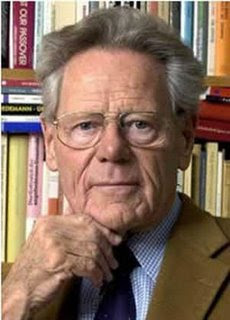
Hans Kung (see part 2) suggests that the Monophysite Christians of Ethiopia have continued the Jewish Christian lineage to some significant degree. These folk keep Saturday and Sunday, abstain from pork, circumcise their male offspring, and display other characteristics that indicate Ebionite origins or influence.
But Kung's most shocking conclusion, particularly in a post 9/11 world, is that these Jewish Christians, with their strongholds in places like Syria (where they may have formed the Christian majority), were eventually swallowed up by Islam; but not before they exercised huge influence on that faith. Schoeps, writing back in 1969, anticipated this when he wrote:
"Many of their central doctrines, however, appear to have survived... in the period of the Monophysite quarrels, [and then] to have entered Arabia by means of the Nestorians. ... From this religion many beliefs flowed in an unbroken stream of tradition into the proclamation of Mohammed."
Kung (2004) states:
"[U]nderground relations between Jewish Christianity and the message of the Qur'an have long been discussed by Christian scholars ... Muhammad took over the prize possession of the Jewish Christians, their consciousness of God, their eschatology proclaiming the day of judgment, their morality and their legends, and established a new apostolate as 'the one sent by God.'
Schoeps:
"[M]any Ebionite beliefs and customs may have been preserved in the mixed population of Syria and Mesopotamia as regional traditions which shaped not only Nestorian Christianity but also the still later Islamic Shi'a sects...
"The fifth Sura (5.48-59) especially, sounds like the extension of the Jewish Christian theology of the covenants to the population of Arabia through Mohammed, the new messenger of God."
Remember the reference to the Pseudo-Clementines?
"In the Pseudo-Clementines religion is defined as follows: 'This is religion, to fear him alone and to believe only the Prophet of Truth' (Hom.7.8). This definition is so constructed that Islam could find its own confession of faith... extensive similarities in structure between Jewish Christianity and Islam explains why the population of the countries bordering Arabia, areas permeated with Monophysitism and Nestorianism, could so quickly become Mohammedan."
Kung:
"The famous designation of the prophet Muhammad, the 'seal of the prophets', already appears in one of the earliest works of the earliest Latin church father, in Tertullian's Adversus Judaeos (before 200) - of course as a designation of Jesus Christ. ...there is no doubt that Judaism was established on the Arabian peninsula by a variant which we call both Jewish and Christian. It may have been this Jewish Christianity which the title 'seal of the prophets' reached, and the title may have been used there and in principle throughout Jewish Christianity to guarantee a particular confessional identity.
"[T]he designation of Jesus as servant ('adb) seems to have been the dominant christological confessional formula. So when Muhammad puts the the title 'servant' at the centre of his preaching about 'Isa (Jesus), he is adopting a scheme from earliest Christianity..."
Schoeps:
"And thus we have a paradox of world-historical proportions, viz., the fact that Jewish Christianity indeed disappeared within the Christian church, but was preserved in Islam, and thereby extended some of its basic ideas even to our own day."
Kung, the Catholic theologian, wonders:
"Let us be clear just for a moment what it would mean for a dialogue between Jews, Christians and Muslims if Muhammad could be understood as the 'Jewish Christian apostle' of the one true God in Arabian garb..."
Muhammad as the Jewish Christian apostle to Arabia? My oh my. Rod Meredith would surely have a hernia at the very thought.
In part 1 I suggested that Church of God believers are totally unrelated to that movement, which died out in the West centuries ago. Have a look at the Bible that Meredith, Flurry, Pack, Kilough and others pound and quote: it's the 66 book Protestant version. The early Christians couldn't have used that, because it didn't exist back then. Their Old Testament was primarily the Septuagint, and they freely cited books that were never accepted into the later Hebrew and Protestant canons. The Churches of God are merely a cluster of confused Protestant sects with delusions of antiquity.
What about the New Testament? Well, there was no New Testament as we know it till 367 CE. In the years before then Jewish Christians had a particular affinity for a version of Matthew's gospel, but were wary of Paul's writings. There's a good case to be made that their beliefs underlie the later Pseudo-Clementine literature, but that's a bit beyond the scope of this discussion. But ask yourself, have you ever seen the Pseudo-Clementines quoted by Herbert Armstrong, or any of his imitators?
I also suggested that scholars may indeed be able to - at least tentatively - identify a more legitimate line of descent for the original non-Hellenistic church, the faction that continued to maintain boundary markers (such as food laws) that kept them apart from emerging Catholicism and Orthodoxy.
Hans Kung (see part 2) suggests that the Monophysite Christians of Ethiopia have continued the Jewish Christian lineage to some significant degree. These folk keep Saturday and Sunday, abstain from pork, circumcise their male offspring, and display other characteristics that indicate Ebionite origins or influence.
But Kung's most shocking conclusion, particularly in a post 9/11 world, is that these Jewish Christians, with their strongholds in places like Syria (where they may have formed the Christian majority), were eventually swallowed up by Islam; but not before they exercised huge influence on that faith. Schoeps, writing back in 1969, anticipated this when he wrote:
"Many of their central doctrines, however, appear to have survived... in the period of the Monophysite quarrels, [and then] to have entered Arabia by means of the Nestorians. ... From this religion many beliefs flowed in an unbroken stream of tradition into the proclamation of Mohammed."
Kung (2004) states:
"[U]nderground relations between Jewish Christianity and the message of the Qur'an have long been discussed by Christian scholars ... Muhammad took over the prize possession of the Jewish Christians, their consciousness of God, their eschatology proclaiming the day of judgment, their morality and their legends, and established a new apostolate as 'the one sent by God.'
Schoeps:
"[M]any Ebionite beliefs and customs may have been preserved in the mixed population of Syria and Mesopotamia as regional traditions which shaped not only Nestorian Christianity but also the still later Islamic Shi'a sects...
"The fifth Sura (5.48-59) especially, sounds like the extension of the Jewish Christian theology of the covenants to the population of Arabia through Mohammed, the new messenger of God."
Remember the reference to the Pseudo-Clementines?
"In the Pseudo-Clementines religion is defined as follows: 'This is religion, to fear him alone and to believe only the Prophet of Truth' (Hom.7.8). This definition is so constructed that Islam could find its own confession of faith... extensive similarities in structure between Jewish Christianity and Islam explains why the population of the countries bordering Arabia, areas permeated with Monophysitism and Nestorianism, could so quickly become Mohammedan."
Kung:
"The famous designation of the prophet Muhammad, the 'seal of the prophets', already appears in one of the earliest works of the earliest Latin church father, in Tertullian's Adversus Judaeos (before 200) - of course as a designation of Jesus Christ. ...there is no doubt that Judaism was established on the Arabian peninsula by a variant which we call both Jewish and Christian. It may have been this Jewish Christianity which the title 'seal of the prophets' reached, and the title may have been used there and in principle throughout Jewish Christianity to guarantee a particular confessional identity.
"[T]he designation of Jesus as servant ('adb) seems to have been the dominant christological confessional formula. So when Muhammad puts the the title 'servant' at the centre of his preaching about 'Isa (Jesus), he is adopting a scheme from earliest Christianity..."
Schoeps:
"And thus we have a paradox of world-historical proportions, viz., the fact that Jewish Christianity indeed disappeared within the Christian church, but was preserved in Islam, and thereby extended some of its basic ideas even to our own day."
Kung, the Catholic theologian, wonders:
"Let us be clear just for a moment what it would mean for a dialogue between Jews, Christians and Muslims if Muhammad could be understood as the 'Jewish Christian apostle' of the one true God in Arabian garb..."
Muhammad as the Jewish Christian apostle to Arabia? My oh my. Rod Meredith would surely have a hernia at the very thought.
Tuesday, 14 July 2009
Willie Dankenbring - Calypso King
 I know, brethren, that you'll be as excited as I am by the release of a new edition of Willie Dankenbring's Prophecy Flush... um, sorry, Flash.
The cover shows President Obama, but I don't think Willie intends it to be flattering. In the table of contents we're told that "The Four Horsemen of the Apo-Calypso Thunder Across the Sky." Shades of Harry Belafonte perhaps? An intertextual reference to the Last Day-o, dayayay-o? I doubt Willie is that clever - just another typo.
Continuing on his anti-Obama crusade, Willie's next article is "Barack Obama and the White Horse." This one contains what could only be called a midrash on that cover illustration. The article ends with the weighty question: "Will Obama go down in history as the world’s final end-time despot, dictator world tyrant – the Pseudo-Messiah who unites the world to fight against Christ at His Second Coming?"
That's easily answered Willie: no.
Actually, Willie is good at asking questions like that. "Will a new Temple be built in Jerusalem on the Temple Mount in the near future?" Again, no. Too bad he couldn't have been spared all the unnecessary time writing the garbage that followed!
Here's another one. "Is there a BIBLICAL Calendar?"
No.
Page after interminable page, it just doesn't get any better. No sign of brain activity anywhere.
But, what me worry. If you're into this kind of thing, hey, knock yourself out.
A True History of the Not-So-True Church (Pt.2)
I've been pondering over how to continue this posting (on the surprising probable fate of the first century Sabbath-keeping church) without chasing after too many red herrings. I'm fascinated by the Pseudo-Clementine literature and a host of related issues, but - (a) I don't have the time to cover all that, and (b) most readers here would probably tune out rapidly anyway. Solution? Here's a reading list if you want to investigate the background for yourself.
Before going on to the major suggestion Kung makes, it may be worth noting that he is one of the most widely read contemporary Roman Catholic theologians, has held a professorship at Tubingen for many years, and was a leading architect of Vatican II. With the conservative papacies that followed on from John XXIII Kung has become one of that church's most incisive critics, while remaining within. In other words, we are a long way from either Dugger & Dodd or Hoeh.
So much for preamble. Next time we'll move to the crux of the matter.
- Michael Goulder. St. Paul versus St. Peter: A Tale of Two Missions. Westminster John Knox, 1994.
- Gerd Ludemann. Heretics: The Other Side of Early Christianity. Westminster John Knox, 1996. [chapter 3]
- Hans-Joachim Schoeps, Jewish Christianity: Factional Disputes in the Early Church. Fortress Press, 1969. One of the few books specifically on the subject over the last 40 years. Surprisingly readable, but long out of print and expensive to get hold of (I picked up a copy second hand for a modest six bucks - my lucky day - but I've seen it going for well over $200.)
 Matt Jackson-McCabe (ed.) Jewish Christianity Reconsidered: Rethinking Ancient Groups & Texts. Fortress Press, 2007. For a more general and recent overview: it's a mixed bag though, drawing on a variety of views from several scholars.
- Hans Kung, Christianity: Essence, History, & Future. Continuum, 2004. [pp. 102-109]
Before going on to the major suggestion Kung makes, it may be worth noting that he is one of the most widely read contemporary Roman Catholic theologians, has held a professorship at Tubingen for many years, and was a leading architect of Vatican II. With the conservative papacies that followed on from John XXIII Kung has become one of that church's most incisive critics, while remaining within. In other words, we are a long way from either Dugger & Dodd or Hoeh.
So much for preamble. Next time we'll move to the crux of the matter.
TM Revealed at Last!
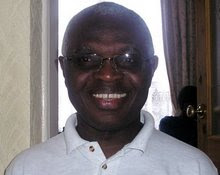
No, not Transcendental Meditation... Tom Mahon.
It's taken a while, but at last Tom has stepped up in front of the camera and posted his visage on his blog, as he long ago promised.
Well done Tom!
Sunday, 12 July 2009
A True History of the Not-So-True Church (Pt.1)
Recently someone posted this comment:
[T]he church has existed somewhere in the world continously [sic] since it's founding, and has kept the sabbath and holy days (among the other doctrines) the whole time.
Oh really? Says who?
This was the position of Dugger and Dodd (and later Herman Hoeh), taking a leaf from Ellen G. White's writings. It's a dogma maintained by any number of splinter sects today. For want of a better term, we could call it "remnant" history (as opposed to "restoration" history promoted by Mormons and some others.)
If you buy into the restoration package, you'll be convinced that the "true church" actually died out, swallowed up by Orthodoxy and Catholicism. The Reformation amounted to little more than shuffling deck chairs. Poor old God had no choice but to perform a complete "reboot" using Joseph Smith, or someone else.
More familiar to us is the remnant package, standard issue in Adventist churches. It maintains that the true church went underground, but survived despite persecution, eventually resurfacing in whichever sect you happen to belong to. Keen believers then go back to dredge the history books to see who might have been the genuine article in past ages, resulting in many a fanciful romp. Dugger and Dodd were convinced, for example, that "Saint Patrick" was a Sabbath-keeper!
Following on from this same remnant fiction the United Church of God proudly proclaims on its website: "We trace our origins to the Church that Jesus founded in the early first century. We follow the same teachings, doctrines and practices established then."
Bollocks!
Actually, we can have a pretty good idea about what did happen to the earliest Christian faith; the movement that was "headquartered" in Jerusalem, looked to James for leadership, and indeed did keep the sabbaths. In a follow-up post I'll make a radical suggestion - but one which is widely accepted by competent historians. But for the present, consider this.
The Churches of God without exception use the 66-book Protestant canon of scripture. Why? The ancient Jerusalem-based church certainly didn't. This distinguishing mark, if nothing else, should alert us to the fact that our heritage is lot more recent than the inflated age it claims; any resemblance is superficial and misleading. The Churches of God have absolutely no linear relationship to so-called "apostolic christianity."
We were'nt buying a Rolex, just a Mumbai sweat-shop rip-off.
So where did the "original" church end up? Remember how Hoeh and his imitators talked about the flight to Pella just before the destruction of Jerusalem? That's a good starting point, but what happened then? More on this in a later posting.
[T]he church has existed somewhere in the world continously [sic] since it's founding, and has kept the sabbath and holy days (among the other doctrines) the whole time.
Oh really? Says who?
This was the position of Dugger and Dodd (and later Herman Hoeh), taking a leaf from Ellen G. White's writings. It's a dogma maintained by any number of splinter sects today. For want of a better term, we could call it "remnant" history (as opposed to "restoration" history promoted by Mormons and some others.)
If you buy into the restoration package, you'll be convinced that the "true church" actually died out, swallowed up by Orthodoxy and Catholicism. The Reformation amounted to little more than shuffling deck chairs. Poor old God had no choice but to perform a complete "reboot" using Joseph Smith, or someone else.
More familiar to us is the remnant package, standard issue in Adventist churches. It maintains that the true church went underground, but survived despite persecution, eventually resurfacing in whichever sect you happen to belong to. Keen believers then go back to dredge the history books to see who might have been the genuine article in past ages, resulting in many a fanciful romp. Dugger and Dodd were convinced, for example, that "Saint Patrick" was a Sabbath-keeper!
Following on from this same remnant fiction the United Church of God proudly proclaims on its website: "We trace our origins to the Church that Jesus founded in the early first century. We follow the same teachings, doctrines and practices established then."
Bollocks!
Actually, we can have a pretty good idea about what did happen to the earliest Christian faith; the movement that was "headquartered" in Jerusalem, looked to James for leadership, and indeed did keep the sabbaths. In a follow-up post I'll make a radical suggestion - but one which is widely accepted by competent historians. But for the present, consider this.
The Churches of God without exception use the 66-book Protestant canon of scripture. Why? The ancient Jerusalem-based church certainly didn't. This distinguishing mark, if nothing else, should alert us to the fact that our heritage is lot more recent than the inflated age it claims; any resemblance is superficial and misleading. The Churches of God have absolutely no linear relationship to so-called "apostolic christianity."
We were'nt buying a Rolex, just a Mumbai sweat-shop rip-off.
So where did the "original" church end up? Remember how Hoeh and his imitators talked about the flight to Pella just before the destruction of Jerusalem? That's a good starting point, but what happened then? More on this in a later posting.
Friday, 10 July 2009
Testimony
Invest nine short minutes. I hope "Sientspirit" continues the series, and some of those in denial about the church's past watch this one.
The intro on YouTube reads: "I go into detail about the Worldwide Church of God (WCG) and end up taking almost 10 minutes to talk about it! I hope I kept it interesting enough; I found it difficult to explain WCG to outsiders, especially in a succinct fashion. Hopefully, you have a little understanding of where I'm coming from once you've watched this video. If you have any questions about the church, feel free to ask! I'll be talking more in detail about certain things that I either only touched on briefly or left out entirely."
The intro on YouTube reads: "I go into detail about the Worldwide Church of God (WCG) and end up taking almost 10 minutes to talk about it! I hope I kept it interesting enough; I found it difficult to explain WCG to outsiders, especially in a succinct fashion. Hopefully, you have a little understanding of where I'm coming from once you've watched this video. If you have any questions about the church, feel free to ask! I'll be talking more in detail about certain things that I either only touched on briefly or left out entirely."
Thursday, 9 July 2009
Phone a Friend

Here's a query from David V. Barrett, a researcher on WCG:
It's very difficult to count how many members left Worldwide either for the offshoots, or for other Churches (I know that some who accepted the new beliefs now attend other Evangelical Churches without the Worldwide baggage), or dropped out of religion altogether, but it must be easier to know how many ministers left Worldwide -- after all, they were on the payroll. Do you happen to know if this number (or percentage) has ever been quoted? I don't recall seeing it.
Does anyone know if the figure has been indeed been published somewhere? I haven't got a clue, other than saying "lots," but I seem to remember folk once marking off the disappearing ministers using a booklet of photographs put together after a ministerial conference during the reign of Joe Senior. Anyone able to source that publication (it used to be online) and/or indicate the number of elders who subsequently dived overboard (or were forced to walk the plank)? Obviously a number would have simply retired, or died in the time since then, so a simple comparison with a current list of ministers would overestimate the loss.
The research in question, a PhD thesis, is now almost complete and should be an invaluable contribution to understanding the WCG/GCI backstory.
Subscribe to:
Posts (Atom)